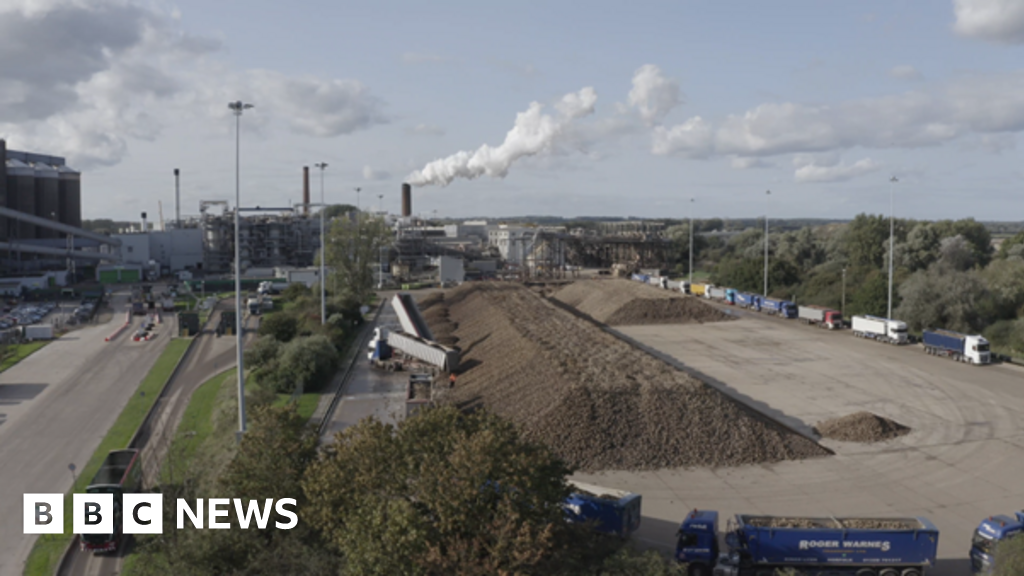
Wissington Sugar Factory: A British Beet Beacon's Enduring Legacy
The Wissington Sugar Factory stands as a monument to British agricultural ingenuity and industrial resilience, a true "British Beet Beacon" in the heart of Eastern England's Fenlands. Born from the vision of local entrepreneur W. T. (Bill) Towler a century ago, this site has not only transformed sugar production but has profoundly shaped local farming practices, employment, and the very landscape of the region. While its earlier decades established its foundation, the period from 1971 onwards marked an era of unprecedented expansion, technological advancement, and strategic repositioning within the evolving global sugar market. This comprehensive article delves into the transformative years of the Wissington Sugar Beet Factory, highlighting its critical role in the UK's industrial heritage and its lasting impact.
A New Era: The Transformative 1970s Expansion
The year 1971 was pivotal for the Wissington Sugar Beet Factory. It marked the completion of a monumental three-year, £10 million reconstruction and expansion project, a clear signal of the British Sugar Corporation's (BSC) ambitious plans for the future of the UK sugar industry. This wasn't merely an upgrade; it was a strategic rationalisation aimed at enhancing efficiency and shortening the labour-intensive processing season for sugar beet. While smaller, less efficient factories across Britain were shuttered, key sites like Wissington and York were earmarked for substantial investment and growth.
Strategic Vision and Capacity Boost
Wissington's selection for this significant expansion was no accident. Located at the epicentre of a prolific beet-growing region – with Norfolk alone accounting for a quarter of all British sugar beet – it benefited from an already modernised agricultural landscape. The goal was clear: to create a facility capable of handling an ever-increasing supply of sugar beet from a 30-mile radius, ensuring rapid turnaround for beet-laden lorries. The expansion dramatically boosted Wissington's processing capacity, adding an impressive 4,200 tonnes per day to reach a grand total of 7,200 tonnes per day. This scaling up was crucial, especially with the anticipated entry of the UK into the European Economic Community (EEC). Forecasts suggested that the end of the Commonwealth Sugar Agreement would necessitate increased domestic processing capacity for beet, solidifying the UK's sugar independence.
Overcoming Fenland Challenges with Engineering Prowess
Building such an expansive industrial complex in the Fens presents unique challenges. The soft, marshy soils are notoriously difficult for large constructions. However, lead contractor John Laing Construction Limited rose to the occasion, constructing most of the new facilities on concrete piling, a testament to engineering ingenuity in adverse conditions. This expansion not only saw a significant increase in processing capabilities but also an enlargement of the factory site's boundaries, reflecting the scale of the operation. For more on the unique engineering feats and innovations at play, explore
Wissington Sugar Factory: Innovation, Fenland Challenges & Growth.
The Dawn of Digital: Computerisation at Wissington
Perhaps the most innovative aspect of the revamped Wissington site was the introduction of a Kent K70 computer system. In the early 1970s, industrial computerisation was a cutting-edge concept, and Wissington was at the forefront. This system was designed to control various critical processes within the factory, from initial beet washing to sugar extraction, while also generating essential management reports. The K70 allowed for unprecedented levels of precision, efficiency, and data-driven decision-making, setting a new standard for sugar beet processing in the UK and beyond. This move highlighted British Sugar's commitment to leveraging technology for operational excellence, optimising resource use and improving overall productivity long before such automation became commonplace.
Navigating the Elements: Harvest Challenges of the Mid-70s
Even with cutting-edge technology and expanded capacity, the raw elements of farming remained a formidable force. November 1974 brought a stark reminder of this, as unusually wet conditions plunged the sugar beet harvest into crisis. Crops across the Marshland silt and Fenland soils were severely jeopardised, with harvesters becoming hopelessly bogged down. The situation grew so dire that some farms resorted to the arduous task of pulling up and topping beet by hand, a back-breaking effort that underscored the resilience and dedication of local farmers.
The British Sugar Corporation took the extraordinary step of calling upon the army to assist with the harvest, illustrating the national importance of the crop. Yields in the Wissington area plummeted to a mere 10 to 11 tons per acre, significantly below the expected 15 ½ tons. Such events highlight the inherent risks in agriculture and the profound impact weather can have on food production, even for a highly industrialised crop like sugar beet. It also showcases the vital role of the Wissington Sugar Beet Factory as a central hub for mitigating such crises, working directly with growers to salvage what they could.
The EEC Influence and a Vision for UK Sugar Self-Sufficiency
The looming prospect of the UK's entry into the European Economic Community was a powerful catalyst for the British sugar industry. While previously operating under the restrictive 1956 Sugar Act, which limited the financial structure and growth potential of the UK sugar beet industry, the "Yes" vote for joining the EEC presented new opportunities.
Unleashing Potential: The 1975 Expansion Drive
In the summer of 1975, with the EEC membership secured, British Sugar announced further substantial expansion plans for the Wissington plant and its network of factories. This new investment, totalling £15 million across its 17 plants, aimed to boost production by an additional 20%. Kenneth Sinclair, CEO of BSC, articulated the strategic shift perfectly: "before entry into the EEC BSC had operated under the 1956 Sugar Act which restricted the financial structure on the UK sugar beet industry….The ‘Yes��� vote for joining the EEC ….gave the go ahead we wanted for massive expansion and modernisation." This liberation from previous constraints allowed BSC to pursue an audacious goal: making the UK 50% self-sufficient in sugar and positioning the company to become the largest sugar-producing entity in the world. This ambitious vision underscored the critical role that facilities like the Wissington Sugar Beet Factory would play in national food security and economic prosperity. For a deeper dive into how these shifts impacted the industry, explore
Wissington's 1970s Expansion: EEC, Innovation, and UK Sugar Legacy.
Beyond Beet: Wissington's Broader Impact and Enduring Legacy
The story of the Wissington Sugar Beet Factory is not just one of industrial processing; it's a narrative deeply interwoven with the fabric of its surrounding community. From its earliest days, founded by a local entrepreneur, the factory has been a consistent source of employment, drawing in skilled workers for the demanding "campaign" season and providing stable jobs year-round. These campaigns, the intense periods of beet processing, were a hub of activity, bringing life and economic vibrancy to the region. Even in 1977, as new campaigns commenced, the dedication of the BSC workers, many of whom were local, remained the lifeblood of the operation.
Wissington has continually adapted, modernised, and innovated, moving from a pioneering computer system in the 70s to ever more sophisticated energy-efficient processes and co-product utilisation today. It has served as a practical example of how industrial heritage can evolve, demonstrating a commitment to sustainability and efficiency in modern agricultural processing. The site represents the continuous quest for optimal yield, minimal waste, and environmental care, ensuring that its legacy extends beyond mere sugar production to encompass responsible industry.
Conclusion
The Wissington Sugar Beet Factory, a century after its founding, stands as a testament to vision, adaptation, and engineering excellence. Its journey from a local entrepreneur's brainchild to a national industrial powerhouse, particularly through the transformative 1970s, mirrors the broader evolution of British agriculture and its relationship with global economics. From pioneering computer control to overcoming severe harvest challenges and seizing the opportunities presented by EEC entry, Wissington has consistently been at the forefront. Its enduring legacy is not just about the sugar it produced, but the community it supported, the innovations it embraced, and its unwavering role as a true British beet beacon, illuminating the path for sustainable agricultural processing for decades to come.